Introduction: The Chaikhana That Never Was
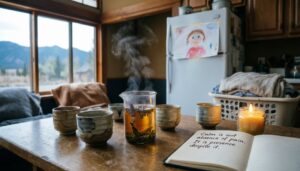
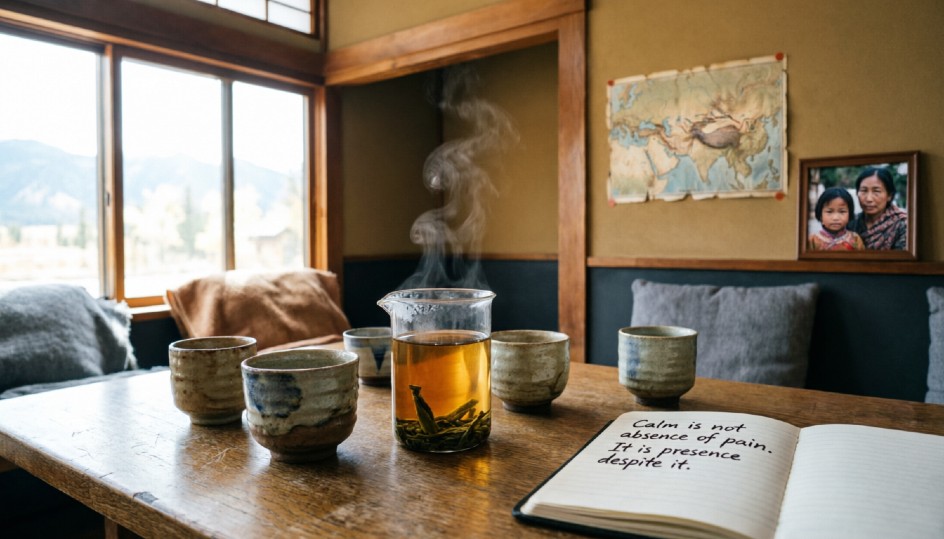
When I was a child, along the ancient Silk Road, there was a place called chaikhana—a teahouse where weary travelers rested, shared stories, and drank warm tea under the same roof. It wasn’t luxury. It was sanctuary.
I always wanted to build one.
Not as a business. As a refuge.
But war came. My homeland crumbled into dust. We became refugees. In 1991, I arrived in the United States—cold, broken, carrying only memories and a single question: How do you rebuild a life when everything you knew is gone?
This is not a success story.
It’s a survival story.
And the teahouse—Lovely—is how I chose to live after losing everything.
Lincoln, NE: The First Attempt — and the First Failure
I settled in Lincoln, Nebraska. Studied Business Management at the local university. For my capstone project, I had to partner with a small business owner. By chance, I spent hours in a coffee shop run by my friend Mark—a kind man who saw something in me I didn’t see in myself.
He helped me draft a business plan: a small tea-and-coffee shop, nestled on a quiet street, serving organic teas and honest conversations.
I never built it.
Because soon after graduation, I turned to what I knew best: plants—and their power to alter states.
In my younger, wilder years, I manufactured controlled substances from botanicals. Not out of malice—but out of curiosity, desperation, and a deep, unspoken grief I couldn’t name.
I ended up in prison. Late 1990s. Locked up for manufacturing and distribution.
That was my first death.
Not of the body—but of the self I thought I was becoming.
The Second Rebirth: Science as a Lifeline
After release, I returned to school. Earned an MS in Biochemistry. Started a family. Two beautiful children. A wife who believed in me even when I didn’t believe in myself.
I was accepted into a PhD program at Anschutz Medical Campus—to study protein formulation. I thought I’d finally found my path: science, precision, redemption.
Then the accident happened.
A car crash. Opioid prescriptions. Heroin. Addiction. I dropped out—not because I failed, but because I had to choose: my kids, or my pride.
That’s when I found kratom.
Not as a miracle. As a molecule with a mechanism.
Mitragynine. Partial μ-opioid agonist. No respiratory depression. A bridge back to myself.
With its help, I weaned off street drugs. I rebuilt trust—with my children, with my community, with my own nervous system.
But then—another fracture.
My wife, diagnosed with Stage 4 pancreatic cancer at 41. Given 3–6 months. She lived two more years. Died at 43. Our kids were 15 and 5.
That was my second death.
The world went silent. And in that silence, I made a vow:
I will not let grief turn me into a ghost. I will build something that honors her memory—and gives my children a world where beauty and truth coexist.
Why a Teahouse? Not a Clinic. Not a Lab. A Chaikhana.
You might ask: Why not open a clinic? A wellness center? A supplement brand?
Because those places speak in diagnoses, dosages, and disclaimers.
I wanted a place that speaks in ritual, silence, and shared humanity.
A teahouse is not neutral ground.
It is intentional ground.
- In a chaikhana, no one asks why you’re tired. They simply pour tea.
- In a chaikhana, time slows—not because you’re distracted, but because you’re held.
- In a chaikhana, the cup is not a delivery system. It’s a covenant: I see you. You are welcome here.
Science taught me how molecules work.
Grief taught me why they matter.
At Lovely, every ingredient is chosen not just for its pharmacology—but for its story:
- The Thai farmers who harvest kratom ethically
- The Japanese artisans who shade-grow sencha
- The Colorado growers who supply us with organic rooibos
We don’t sell “wellness.”
We offer a way to return to yourself—one sip at a time.
The Philosophy Behind the Counter
Lovely exists because I learned three truths:
- Consciousness is not the boss of the body—it’s the interpreter.
You can’t command your nervous system into calm. But you can learn to listen to its signals—and respond with care. Tea is that conversation. - Beauty is not decoration. It’s respect.
A hand-thrown cup, a handwritten label, a slow pour—these aren’t aesthetics for Instagram. They’re acts of reverence. For the plant. For the person. For the moment. - Agency is the only inheritance worth giving.
My children will not inherit wealth. They will inherit this: the knowledge that they are not victims of their biology—that they can shape their state, their focus, their peace—through choice, not chance.
That’s why Lovely is small. Why we cap batches at 5,000 units. Why I still taste every batch of freeze-dried kratom myself.
Because scale without integrity is betrayal.
And I’ve betrayed enough already.
Conclusion: Lovely Is Not a Brand. It’s a Promise.
I didn’t open a teahouse to make money.
I opened it to prove that even after loss—after prison, addiction, widowhood—you can still create something lovely.
Not perfect.
Not easy.
But true.
So come sit.
Bring your grief, your questions, your exhaustion.
We’ll brew you a cup of oolong, or kava, or white tea—whatever your nervous system needs today.
And if you ask why I built this place…
I’ll tell you plainly:
Because the world needs more chaikhanas.
And I finally had the courage to be the one who pours the tea.
P.S. Every week, 2% of profits go to reforestation and ethical kratom farming initiatives in Southeast Asia. Because healing must extend beyond the self.